
Why Your AC Smells Bad in Jeddah: 7 Warning Signs and Proven Fixes
Core Introduction to Bad AC Smells and Their Causes
A bad smell from your air conditioner can make your home uncomfortable and may point to a problem that needs attention. Why your AC smells bad depends on the type of odor, when it appears, and which parts of the system are affected. A musty smell often suggests moisture and microbial growth, while a burning odor may signal an electrical fault. A rotten-egg smell can indicate a separate gas or drain issue, depending on the source.
In Jeddah, frequent cooling, coastal humidity, dust, and clogged filters can make AC maintenance especially important. If cleaning the filter does not solve the problem, AC Repair Service In Jeddah can help arrange an inspection through its website.
Why This Matters for Jeddah Homeowners and Businesses
Homes in Al Basateen, Al Aziziyah, Al Muhammadiyah, Al Murjan, and nearby districts often depend on air conditioning for daily comfort. When moisture collects in a drain pan or dust builds up on the evaporator coil, unpleasant odors may spread through the room. Poor drainage can also cause water leaks and damage nearby surfaces.
Do not ignore an odor that returns soon after cleaning. A dirty filter may be the cause, but the smell could also come from a blocked condensate drain, contaminated insulation, or an electrical component. Finding the source first helps prevent wasted repairs.
A Real-World Scenario: Finding the Source of a Musty Smell
Consider a common service scenario: a homeowner notices a damp smell whenever the AC starts. The filter looks dusty, so it is replaced, but the odor returns. An inspection then reveals standing water in the drain pan and restricted condensate flow.
This example illustrates why replacing a filter may not fix every odor problem. A technician should inspect the drainage path, evaporator coil, and accessible blower components before recommending cleaning or repairs. It is an illustrative scenario, not a verified customer case. The correct fix depends on the actual findings.
How AC Odor Diagnosis and Repair Actually Work
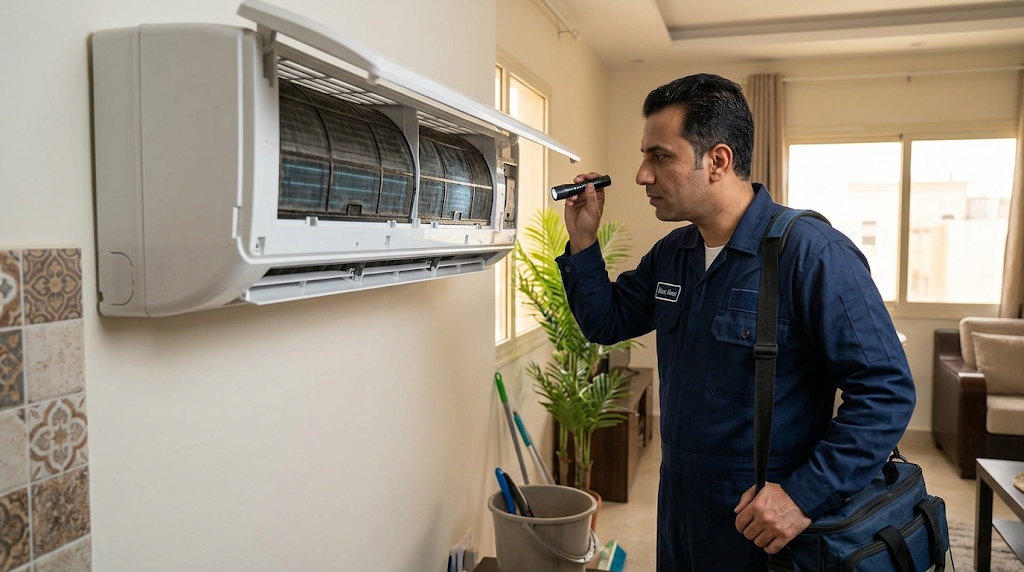
Finding the cause of an AC odor starts with identifying its character, timing, and location. A technician should determine whether the smell comes from the indoor unit, outdoor equipment, nearby plumbing, or the room itself. The inspection may include the air filter, evaporator coil, blower wheel, condensate pan, drain line, and electrical connections.
The repair should match the diagnosis. Surface cleaning will not correct a damaged wire or persistent drainage fault. Likewise, replacing a component without confirming the cause can waste money. A clear inspection, suitable repair, and final operational test provide a better path to lasting results.
The Initial Phase: Inspection and Preparation
Before cleaning begins, switch off the AC if it produces a strong odor, leaks water, or shows unusual behavior. Note whether the smell occurs at startup, during cooling, or after shutdown. Check the filter only if it is safe to access and the manufacturer’s instructions permit it.
A technician should ask about recent maintenance, water leaks, unusual sounds, and changes in cooling performance. They should also inspect accessible areas for dust, moisture, blocked drainage, and visible damage. This first phase helps narrow the possible causes and avoids unnecessary chemical treatments or replacement parts.
The Execution Phase: Cleaning and Repair
Once the cause is identified, the technician can select the right repair. A dirty filter may need cleaning or replacement according to its type. A blocked drain line may need careful clearing, while a contaminated coil or blower may require professional cleaning with compatible products.
After the work, the technician should verify that condensate drains correctly, the unit operates normally, and the odor has reduced or disappeared. If the smell remains, the investigation should continue rather than masking it with fragrance. Electrical faults, refrigerant problems, and damaged insulation require appropriate technical attention.
Technical Details: Components That Can Cause Odors
The evaporator coil cools warm indoor air, allowing moisture to condense on its surface. That water should flow into a drain pan and through the condensate line. Dirt, poor drainage, or persistent dampness can create conditions that produce musty odors. The blower wheel can also collect dust and debris.
A technician may check coil condition, drain flow, filter fit, airflow, and signs of microbial growth. Refrigerant pressure or electrical measurements should be taken only when relevant to the diagnosis and with suitable instruments. There is no single pressure or temperature target for every AC; readings depend on the refrigerant, equipment design, and operating conditions.
Core Benefits and Return on Investment
Fixing an AC odor at its source can improve comfort, reduce recurring cleaning needs, and help identify faults before they cause more damage. The financial benefit depends on the actual problem. Replacing a clogged filter is usually simpler than repairing a leaking drain pan or damaged electrical connection.
Odor removal does not automatically mean an AC is more energy-efficient or that indoor air is free from harmful contaminants. Those outcomes depend on the condition of the whole system. A proper inspection gives homeowners, property managers, and business owners a clearer basis for deciding which work is necessary.
Financial, Strategic, and Time-Saving Advantages
Prompt diagnosis can prevent repeated spending on air fresheners, unnecessary filter changes, or cleaning products that only hide the smell. It may also reveal a drainage issue before water damages ceilings, walls, or furniture. For landlords and business owners, resolving the cause can reduce disruption for occupants.
Ask for a written breakdown of the recommended work, including cleaning, replacement parts, and any follow-up visit. Compare quotes based on the same scope rather than choosing solely by price. The best option is the one that addresses the confirmed cause and includes a suitable test of the repair.
A Useful Metric to Track
Record how often the odor occurs, how long it lasts, and whether it returns after cleaning. Also note filter replacement dates, visible leaks, and any changes in cooling performance. These observations give the technician useful diagnostic information.
There is no universal percentage for energy savings after odor-related repairs. A repair may improve operation if an underlying fault restricts airflow, but cleaning alone does not guarantee lower electricity bills. For meaningful comparisons, review energy use under similar weather and operating conditions rather than relying on a single day’s reading.
Common AC Odor Problems and Challenges
Not every unpleasant smell comes from the AC itself. A blocked plumbing trap, nearby drain, damp wall, or stored chemical can release odors that enter through the return-air path. A musty smell may point to moisture, while a burning-plastic smell can indicate overheating electrical parts. A rotten-egg odor needs careful attention because it may signal a gas leak or another hazardous source.
Intermittent smells are harder to trace because the source may only become noticeable during startup or after the unit shuts down. Avoid spraying perfume, bleach, or household cleaners into the unit. These products may damage components or expose occupants to irritating vapors without solving the underlying issue.
Choosing the Right AC Repair Professional
Choose a technician who investigates the source of the odor instead of offering the same cleaning package for every complaint. A suitable professional should explain the findings in plain language, identify any safety concerns, and distinguish necessary repairs from optional maintenance.
For properties in Al Zahraa, Al Naim, Al Nahda, Al Khalidiyah, and Al Shati, ask whether the provider serves your district and can explain the expected arrival window. Before work starts, confirm the inspection fee, labor charges, parts policy, and any warranty terms. A clear scope of work makes it easier to judge the proposed repair.
Key Credentials and Features to Look For
Look for relevant HVAC training, appropriate tools, safe electrical work practices, and experience with your AC type, whether it is a split unit, ducted system, or another design. The technician should follow manufacturer instructions and use cleaning products compatible with the equipment.
Ask how the technician will confirm the cause, protect nearby surfaces, manage condensate, and test the system after repair. Be cautious if someone immediately recommends replacing the entire AC without checking simpler possibilities. A trustworthy diagnosis should connect the observed fault to the proposed solution and explain any uncertainty that remains.
Crucial Evaluation Questions
Use these questions when comparing repair providers. The answers can help you understand whether the proposed service addresses the actual problem or simply treats the visible symptoms.
| Question to Ask | Why It Matters |
|---|---|
| What is causing the odor? | Helps establish a diagnosis before work begins. |
| What inspection will you perform? | Shows whether relevant components will be checked. |
| Which repairs are necessary? | Separates essential work from optional cleaning. |
| What will the total cost include? | Clarifies labor, parts, and possible extra fees. |
| Will you test the AC after repair? | Confirms that operation and drainage are checked. |
Understanding AC Repair Costs in Jeddah
The cost of removing an AC odor depends on its source, the unit’s design, accessibility, and the work required. A routine filter replacement differs from deep coil cleaning, drain repair, blower removal, or electrical troubleshooting. Multiple indoor units or difficult ceiling access can also affect labor time.
An accurate quote should follow an inspection or clearly state which assumptions it uses. Ask whether the price includes materials, cleaning, testing, and any return visit. Avoid relying on a fixed online estimate as a guaranteed price for your home or business. The final amount should reflect the confirmed fault and agreed scope.
Breakdown of Base Costs and Resources Required
A typical service estimate may separate the diagnostic visit, labor, cleaning materials, replacement parts, and any specialist work. The technician may need access to the indoor unit, drain line, electrical isolator, and outdoor equipment, depending on the suspected cause.
Before approving work, request an itemized estimate and ask which tasks can be completed during the same visit. If a replacement part is needed, confirm its specification and whether the quoted price includes installation. Do not approve refrigerant charging merely because the AC smells bad; an odor alone does not establish a refrigerant fault.
Hidden Fees and Unexpected Costs
Unexpected charges may arise when technicians discover damaged insulation, a cracked drain pan, difficult access, or a failed electrical component. These findings can be legitimate, but the provider should explain them before carrying out extra work whenever possible.
Ask whether the diagnostic fee is separate from the repair cost and whether an emergency or after-hours visit carries a surcharge. Clarify any cancellation charges, disposal fees, or warranty exclusions. Written approval for changes to the original quote helps prevent disputes and keeps the repair within your budget.
Pro Tip: Avoid Paying for the Same Problem Twice
Describe the odor accurately when booking. Mention when it starts, which room is affected, whether water is leaking, and whether the smell resembles dampness, burning, or sewage. This information helps the technician prepare for a focused inspection.
Keep the previous service invoice if the smell returned after a recent cleaning. It can show what was already done and help determine whether the original cause was missed or a new fault has developed. Avoid paying for repeated cleaning until the provider explains why the odor persists.
Step-by-Step Guide to Handling a Bad AC Smell
Start by identifying the odor and checking for immediate danger. A mild musty smell may call for inspection and cleaning, but burning odors, smoke, or a suspected gas leak require a more cautious response. Do not keep running a unit that appears unsafe just to see whether the smell disappears.
Once the immediate risk is addressed, arrange an inspection if the odor persists, returns quickly, or comes with water leaks or poor cooling. Explain the symptoms and ask for a diagnosis before approving repairs. After service, follow the maintenance instructions and monitor whether the smell returns during normal operation.
What to Do First
Turn off the unit if you notice burning, smoke, unusual electrical sounds, or signs of overheating. If you suspect a gas leak, avoid flames and electrical switches, leave the affected area, and contact the appropriate emergency service from a safe location. Do not try to locate the leak yourself.
For a mild musty smell without warning signs, inspect the accessible filter according to the manufacturer’s instructions. If it is visibly dirty, clean or replace it as directed. If the odor remains, book professional diagnostics instead of dismantling the unit or pouring chemicals into its drain.
Tools and Information to Prepare
You do not need specialist equipment to report an AC odor. Prepare the unit’s make and model if available, the approximate age of the system, the date of its last service, and a short description of the smell. Photos of visible water leaks may also help, provided you can take them safely.
Do not open electrical panels, climb onto unsafe roofs, or remove sealed components. Refrigerant gauges, electrical meters, coil-cleaning equipment, and drain-clearing tools belong in trained hands when their use presents a risk. Good symptom notes are more useful than attempting a hazardous DIY repair.
Expert Strategies for Long-Lasting Odor Control
The best way to prevent recurring AC odors is to control moisture, keep filters maintained, and correct drainage problems early. In coastal areas such as Obhur Al Shamaliyah and Obhur Al Janoubiyah, outdoor conditions can contribute to corrosion and moisture exposure, though the cause of an indoor odor still needs to be confirmed.
Use the filter type and maintenance interval recommended for your system. Keep return-air grilles clear, address leaks promptly, and schedule inspections based on operating conditions. If an odor returns after professional cleaning, request a follow-up diagnosis rather than repeating the same treatment without checking for an unresolved fault.
Top Mistakes to Avoid
Masking a bad smell with room spray does not remove the source. Pouring bleach or strong chemicals into the drain, spraying disinfectant onto electrical parts, or scrubbing delicate coil fins can also cause damage. Another common mistake is assuming every musty odor means mold or that every unusual smell comes from refrigerant.
Avoid guessing based on smell alone. Note the symptoms, stop using equipment that appears unsafe, and seek a qualified inspection when the cause is unclear. A repair should address the confirmed problem and include appropriate checks afterward.
Mistake 1: Treating Every Odor as a Dirty Filter
A dirty filter can trap dust and restrict airflow, but it is not the only source of bad smells. If the filter is clean and the odor continues, replacing it repeatedly is unlikely to solve a blocked drain, contaminated coil, damp insulation, or electrical fault.
To prevent this mistake, ask the technician to inspect the components that could explain your symptoms. The diagnosis should match the evidence. If a burning odor is present, stop the AC and seek professional help rather than continuing to test it. Safety takes priority over routine troubleshooting.
Maintenance, Longevity, and Long-Term Care
Regular maintenance can reduce the chance of recurring odors, although no schedule eliminates every possible fault. Follow the manufacturer’s guidance for filter cleaning or replacement, and arrange professional inspections according to the system’s condition and use. In homes with heavy dust exposure or frequent AC operation, filters may need attention sooner.
Check for visible leaks, slow drainage, unusual noises, or changes in cooling. Property managers should keep service records for each unit, including the date, reported symptoms, work performed, and parts replaced. These records help identify repeated faults and make future inspections more focused.
Daily, Weekly, and Ongoing Best Practices
Keep furniture and curtains away from return-air grilles, and do not block the supply vents. Check accessible filters at the intervals recommended by the manufacturer. After a service visit, watch for water dripping from the indoor unit or an odor that returns during the next few cooling cycles.
There is no need to inspect internal components every day. Instead, respond to changes in smell, airflow, drainage, and sound. Arrange professional cleaning when the inspection shows that it is needed. If your unit has a condensate pump, drain treatment system, or special filter, follow the instructions for that specific design.
Insider Tip for Long-Term Success
Ask the technician to identify why moisture or dirt accumulated, not just remove what is present. A drain line that repeatedly blocks may need correction of its routing or slope, while recurring dampness may point to an insulation or drainage issue. The proper fix depends on the system design.
Keep the invoice and request notes about the condition of the coil, blower, filter, and condensate drain. That record creates a useful starting point for the next maintenance visit and helps you avoid paying for the same diagnostic steps without reason.
Comparing Alternative AC Odor Solutions
The right option depends on whether the odor comes from a simple maintenance issue, a drainage fault, contamination, or a safety problem. Homeowners can handle limited tasks, such as checking an accessible filter, when the manufacturer’s instructions permit it. Internal cleaning and electrical or refrigerant work may require professional tools and training.
Air fresheners and scented sprays only cover the smell. Replacing the whole AC without a confirmed reason can be wasteful. A diagnosis-led approach helps match the work to the fault, but replacement may still be appropriate when a component is damaged beyond repair or the system has reached the end of its useful life.
Traditional Methods vs. Modern Diagnostic Solutions
Traditional troubleshooting often starts with a visual check, filter inspection, and basic cleaning. These steps can resolve simple problems, but they may miss hidden drainage restrictions, damaged insulation, or electrical faults. Modern diagnostic work combines visual inspection with appropriate measurements and equipment-specific procedures.
Neither approach should rely on technology for its own sake. A camera, meter, or other tool is useful only when it helps answer a specific diagnostic question. Ask the technician what the test will establish and how its result affects the repair recommendation.
Why Diagnosis-Led Repair Is the Better Choice
Diagnosis-led repair connects the symptoms to a likely cause and then checks that cause before work begins. It reduces the risk of replacing parts without evidence and provides a clearer record of what was repaired. It also leaves room for a technician to explain when the source cannot be confirmed during the first visit.
This approach does not guarantee a one-visit fix. Hidden damage or intermittent faults may require further testing. A good provider explains what has been confirmed, what remains uncertain, and what the next step will cost before proceeding.
Geographic, Legal, and Safety Considerations in Jeddah
AC repair work should follow applicable Saudi requirements, equipment-manufacturer instructions, and relevant electrical and refrigerant safety practices. Requirements can vary by work type, building, and service provider, so confirm the applicable rules before major repairs or refrigerant handling. For commercial premises, property managers should also consider occupant safety, maintenance records, and any building-specific procedures.
The coastal climate makes regular inspection useful, but location alone cannot prove the cause of an odor. A technician should assess the actual unit and surroundings. Choose a provider that can explain its safety procedures, qualifications, and responsibility for the work.
Navigating Local Regulations and Industry Standards
Ask whether the technician and company meet the applicable Saudi licensing and work requirements for the service being performed. Refrigerant handling, electrical repairs, and work in shared or commercial buildings may have specific requirements. For larger properties, confirm whether building management approval is needed before accessing rooftops, plant rooms, or shared HVAC equipment.
There is no single odor-related compliance metric that applies to every residential AC. Performance checks should follow the equipment’s specifications and relevant procedures. Where indoor-air testing is appropriate, the sampling method and interpretation should suit the suspected contaminant. Do not accept invented pass marks or universal readings without a valid technical basis.
Essential Safety and Risk-Reduction Protocols
Electrical isolation should be completed before internal servicing, using the proper procedure for the equipment. Technicians should protect nearby surfaces, manage cleaning chemicals according to their labels and safety data, and avoid exposing occupants to unnecessary fumes. Refrigerant work requires suitable equipment and trained personnel.
If smoke, sparks, a strong burning odor, or a suspected gas leak occurs, stop troubleshooting and follow the appropriate emergency precautions. Keep children and pets away from the affected area until it is safe. After repair, request confirmation that the unit operates correctly and that any drainage or electrical issue identified during the inspection has been addressed.
Conclusion and Summary
A bad AC smell can come from dust, trapped moisture, a blocked condensate drain, contaminated components, or a more serious electrical fault. The odor offers a clue, but it does not prove the cause. Identifying the source is the most useful first step toward a lasting fix.
For Jeddah homeowners, property managers, and business owners, prompt attention can help protect comfort and reduce the risk of recurring problems. Check only the components you can access safely, avoid chemical shortcuts, and arrange professional diagnostics when the smell persists or raises a safety concern.
Final Recap of Value
Start with the type of smell and when it occurs. Check the accessible filter if it is safe to do so, but do not assume that a clean filter means the entire system is clean. Persistent musty odors may require inspection of the coil, blower, and drain, while burning smells call for immediate caution.
A suitable repair should address the confirmed fault, explain the work and cost, and include appropriate operational checks. Keep maintenance records and monitor the unit after service. These steps help you make informed decisions without paying for unnecessary treatments or ignoring a potentially serious issue.
Next Steps for Your AC Repair
If your AC still smells bad after basic filter maintenance, arrange an inspection rather than masking the odor. Explain the symptoms, mention any water leakage or cooling changes, and ask for a written estimate before approving repairs.
You can contact AC Repair Service In Jeddah through its AC repair website to inquire about inspection and repair options. Share your location, whether you have a split or ducted system, and the type of odor you notice. Confirm service availability, fees, and the expected arrival time before booking.
Frequently Asked Questions
Top Queries Answered
1. Why does my AC smell musty when I turn it on?
A musty smell often points to moisture and accumulated dirt around the evaporator coil, drain pan, or blower. A dirty filter may also contribute. If the odor returns after filter maintenance, arrange an inspection to check drainage and internal components.
2. Why does my AC smell like rotten eggs?
A sulfur-like smell may come from a nearby drain or another source, but it can also indicate a gas leak. If you suspect gas, leave the affected area, avoid flames and electrical switches, and contact the appropriate emergency service from a safe location.
3. Can a bad AC smell make people sick?
An odor alone cannot identify a specific health risk. Dust, dampness, cleaning chemicals, and other airborne substances may irritate some people. Stop using the system if it produces a strong or unusual odor, ventilate when safe, and seek professional advice if symptoms occur.
4. How do I remove a bad smell from my AC?
Start by checking the accessible filter according to the manufacturer’s instructions. If the odor persists, have the coil, blower, drain pan, and condensate line inspected as appropriate. Avoid spraying household chemicals into the unit or using fragrance to hide the smell.
5. When should I book professional AC repair in Jeddah?
Arrange service if the odor persists, repeatedly returns, or occurs with water leakage, poor cooling, or unusual noises. Turn off the unit if you notice a burning smell or other signs of electrical danger. For a suspected gas leak, leave the area and contact emergency services.
Final Bonus Tip for the Reader
Before booking, write down when the smell starts, whether it fades, and which rooms are affected. This simple record can help the technician narrow down the possible causes. If the odor appeared after recent maintenance, keep the invoice and describe the previous work. Clear information supports a more focused inspection, but the final diagnosis should always depend on the equipment and the findings on site.
Final Thoughts: A bad smell from your AC is worth investigating, especially when it keeps returning after cleaning. The right solution starts with understanding the source, choosing a repair that matches the problem, and checking that the system works correctly afterward. Avoid quick fixes that cover the odor without addressing its cause. If you live or work in Jeddah and need help with a persistent AC smell, AC Repair Service In Jeddah is a place to start your service inquiry. Visit the booking website to discuss your symptoms, confirm availability, and ask about inspection costs before arranging a visit.