
Why Does My AC Leak Water and How to Stop It in Jeddah, Saudi Arabia
When an air conditioner starts leaking water, the first question is usually simple: where is the water coming from? In many cases, the answer involves a blocked condensate drain, a dirty evaporator coil, poor airflow, a frozen coil, a damaged drain pan, or incorrect installation. In Jeddah, high heat and humidity can increase the amount of moisture an AC removes from indoor air, so drainage problems can become noticeable quickly. A small drip may turn into ceiling stains, wall damage, mold growth, or electrical concerns if it is ignored. In our field experience, water leakage should be treated as a symptom rather than a diagnosis. The visible water may not be close to the actual fault. A clogged drain line can back up water inside a concealed fan-coil unit, while a frozen evaporator can melt and overflow after the system shuts down. Homeowners, property managers, and small business owners in Al Basateen, Al Aziziyah, Al Muhammadiyah, Al Murjan, Al Zahraa, Al Naim, Al Nahda, Al Khalidiyah, Al Shati, and the Obhur districts can benefit from a structured inspection rather than repeated temporary fixes. Professional AC Repair Services in Jeddah can check condensate drainage, evaporator condition, airflow, refrigerant-side performance, insulation, drain-pan slope, and installation quality. The aim is to find the source, remove the cause, and verify that water drains correctly after the repair. Do not simply pour cleaning liquid into a drain or keep operating a leaking unit without understanding the reason. Water near electrical components can create a serious hazard. When the source is confirmed early, the repair is often more focused, and the risk of secondary property damage can be reduced.
Core Introduction to AC Water Leakage and Its Causes
Air-conditioner water leakage usually comes from condensate, which forms when warm indoor air passes over a cold evaporator coil. That moisture should collect in a drain pan and travel through a condensate pipe to a safe discharge point. When that path becomes blocked or the system creates too much frost, water can escape somewhere it should not. A cracked pan, poorly pitched drain, loose pipe joint, damaged insulation, or inadequate airflow can create a similar complaint. The important point is that water itself is not the root cause. It is evidence that the system’s moisture-control or drainage process is no longer working as designed. Before repairing anything, the source and operating conditions should be checked together.
Why This Matters for the Local Area / Target Audience
Jeddah’s coastal climate can place significant moisture and cooling demand on air-conditioning systems. An AC may remove a large amount of humidity during long operating cycles, which means condensate management becomes an important part of system performance. In apartments, villas, offices, and shops, a blocked drain can quickly create stains or dripping around indoor units. Property managers may also face repeated tenant complaints when concealed fan-coil units leak above ceilings. What we typically see on the ground is that owners clean visible water but do not investigate why it appeared. That approach can hide the underlying issue. A proper assessment checks the drain path, evaporator coil, airflow, pan condition, insulation, and system operation rather than treating the visible puddle as the entire problem.
A Real-World Scenario or Example
In our field experience, a common call begins with water dripping from an indoor split AC even though the unit is still cooling. On inspection, the evaporator coil may be damp and the drain pan partially filled. A quick drain-line test can reveal a restriction farther down the pipe, where dirt and biological buildup have reduced the opening. In another case, the drain is clear, but the evaporator coil is freezing because airflow is restricted by a heavily loaded filter or blower problem. The ice later melts and overwhelms the pan. These two systems produce the same visible symptom but require completely different repairs. That is why we avoid guessing from the location of the water alone. The entire condensate and cooling process must be checked.
How AC Water Leakage Actually Works / The Core Process
An indoor AC unit naturally produces water as it removes moisture from air. The evaporator coil is colder than the room air, so water vapor can condense on its surface. That water should fall into a drain pan and flow through a condensate line using gravity or, in some installations, a condensate pump. The amount of condensate depends on indoor humidity, airflow, coil temperature, runtime, and system operation. If the drain path is restricted, water backs up. If the coil freezes, melting ice can produce a sudden overflow. If insulation is damaged, condensation may form on the outside of a pipe or duct instead of inside the designed drainage system. Understanding these paths makes diagnosis much more accurate because the technician can identify where moisture originates and where it is escaping.
The Initial Phase / Preparation
The first step is to determine exactly where the water appears and when it happens. Is the drip coming from the front of a wall-mounted split unit, a ceiling cassette, a concealed fan-coil, or ductwork? Does leakage begin after several hours of cooling, immediately after startup, or only when the system turns off? These details are useful because different patterns point toward different causes. The accessible air filter should be checked, and visible airflow restrictions should be noted. The drain outlet should also be identified where possible. If water is near electrical components, the system should be switched off. Do not remove panels that require electrical access. A technician should then inspect the indoor unit, drainage route, evaporator, insulation, and operating conditions before deciding what repair is needed.
The Execution / Implementation Phase
The technician should first confirm the drainage path and determine whether water can move freely from the pan to the approved discharge point. Drain lines may be tested using controlled water flow, suitable vacuum equipment, or other methods appropriate to the installation. The pan should be inspected for cracks, corrosion, improper slope, or accumulated dirt. The evaporator coil should be checked for heavy contamination and signs of icing. Airflow measurements can help determine whether poor circulation is contributing to coil freezing. Refrigerant-side readings may be appropriate when operating conditions suggest a charge or refrigeration problem. Insulation around cold lines and drain components should also be inspected for condensation. After cleaning or repair, the system should be run long enough to verify that condensate reaches the intended outlet and that no new leakage appears. A repair is not complete until the drainage path is proven to work.
Technical Specifications or Deep-Dive Details
A technical condensate diagnosis may involve several measurements and observations. Evaporator coil temperature, return-air temperature, supply-air temperature, external static pressure, airflow, suction pressure, and refrigerant superheat can help identify why a coil may be running too cold. Drain-pipe slope is also important in gravity systems because low spots can trap water and encourage blockage. The exact pipe diameter and slope should follow the equipment and installation requirements rather than a generic internet recommendation. Where a condensate pump is installed, float-switch operation and pump discharge should be checked. Insulation thickness and vapor sealing matter because a cold pipe exposed to humid air can sweat and drip even when the drain itself is clear. Technical diagnosis should connect the water pattern with system operation, not simply clear the pipe and assume the issue is permanently solved.
Core Benefits and ROI
Fixing an AC water leak correctly protects more than the air conditioner. It can protect ceilings, paint, drywall, flooring, furniture, electrical equipment, and indoor air quality. A blocked drain may be a relatively simple service problem, while prolonged leakage can create a much larger property repair. For landlords and property managers, repeated water complaints can also affect tenant satisfaction and maintenance costs. In our field experience, early intervention is usually easier when the leak is still limited to the immediate equipment area. A proper repair should also address the cause. If a drain is blocked because the coil and pan are heavily contaminated, cleaning only the pipe may provide temporary relief. If the coil freezes because airflow is restricted, clearing the drain without correcting airflow leaves the root problem intact.
Financial, Strategic, or Time-Saving Advantages
A correct diagnosis can reduce repeat service visits because the technician addresses the cause rather than only the visible water. Property managers benefit from fewer recurring complaints and a clearer maintenance history for each unit. Homeowners may avoid secondary repairs to ceilings or walls. Small businesses can reduce disruption caused by water around offices, retail areas, or equipment. There is also a planning benefit. If an AC is older and repeatedly develops drainage, coil, or mechanical faults, the owner can evaluate whether continued repair is sensible before a major failure occurs. No technician can guarantee that a water leak will never return, because drainage problems can result from several interacting conditions. However, checking the entire system gives the customer a much better chance of solving the actual fault instead of paying for the same symptom repeatedly.
Specific Data Point or Metric to Consider
One useful diagnostic metric is condensate flow. The exact amount varies with indoor humidity, equipment capacity, runtime, and operating conditions, so there is no single flow rate that applies to every AC. More useful is whether water reaches the intended discharge point consistently without backing up into the pan. Another important metric is external static pressure, which can reveal airflow restrictions that contribute to coil icing and poor performance. Technicians may also record return-air temperature, supply-air temperature, coil condition, and relevant refrigerant readings. These values create a clearer operating picture. For property managers, tracking recurring drain blockages by unit can reveal whether a specific installation has a design, access, slope, contamination, or maintenance problem rather than an isolated blockage.
Common Industry Challenges & Roadblocks
AC water leaks can be difficult because the visible drip may be far from the original source. Ceiling-mounted systems can leak into surrounding spaces before water becomes visible. Condensation on refrigerant piping can look like a drain problem. A clogged drain may coexist with poor airflow or coil contamination. Another challenge is access. Concealed fan-coil systems may sit above ceilings, inside service closets, or in locations that make the entire drainage route difficult to inspect. In older properties, drain pipes can have low points, improvised joints, damaged insulation, or poor discharge routing. In our field experience, repeated “drain cleaning” without checking the installation often leads to recurrence. The technician should ask why the line became blocked and whether another condition is causing excess moisture, ice, or restricted drainage.
Choosing the Right Solution / Professional
Choose an AC repair professional who understands both refrigeration and condensate management. A technician should know how airflow, coil temperature, humidity, refrigerant operation, and drainage interact. Ask whether the provider will inspect the complete drain route rather than only clearing the visible outlet. For concealed units, the technician should also explain where the pan and drain are located and whether access limitations affect the inspection. A professional service should distinguish between a blocked drain, a frozen coil, a cracked pan, insulation condensation, and an installation problem. Professional AC Repair Services in Jeddah should also explain what was found, what was corrected, and what should be monitored. A good technician should never use a leak itself as proof that a specific part has failed without testing the system.
Key Credentials or Features to Look For
Look for a provider that can document technical HVAC work and explain the diagnostic process. For commercial or construction-related work, Saudi projects may involve requirements linked to the Saudi Building Code and local authority procedures. The Saudi Building Code platform identifies SBC 501 as the Saudi Mechanical Code, which covers mechanical systems relevant to building projects. For service work, practical qualifications also matter: safe electrical procedures, correct refrigerant handling, appropriate diagnostic instruments, knowledge of condensate systems, and familiarity with equipment manufacturers. Ask whether the technician provides a written service report. A clear report should state the observed leak location, likely cause, work performed, and any remaining recommendation. Credentials matter, but so does disciplined field procedure. You want someone who can diagnose the whole system rather than repeatedly clean the same drain.
Crucial Evaluation Questions
| Question to Ask | Why It Matters |
|---|---|
| Where is the water actually coming from? | Separates the visible leak from the underlying source. |
| Did you inspect the complete condensate drain path? | A blockage may exist away from the indoor unit. |
| Why is the coil producing or retaining excess water? | Helps identify airflow, icing, humidity, or coil issues. |
| Did you check the drain pan and insulation? | Cracks, poor slope, or pipe sweating can cause repeat leaks. |
| How will you verify the repair? | The technician should prove that drainage works after service. |
These questions are useful because they move the conversation from “the AC is leaking” to measurable findings. Ask the technician to show where the blockage or damage was found whenever practical. If the answer is “we cleared the drain,” ask what caused the blockage and whether the pan, coil, and airflow were checked. If the coil was frozen, ask why it froze. If insulation was wet, ask whether the cold surface is now properly sealed. A professional should be able to explain the repair in simple language. You are not looking for complicated terminology. You are looking for a clear chain from symptom to cause, corrective action, and verification.
Understanding the Investment / Pricing Structure
The cost of stopping an AC water leak depends on the cause, system type, accessibility, and extent of property damage. A simple condensate blockage may involve a straightforward service visit. A cracked drain pan, concealed pipe restriction, failed condensate pump, damaged insulation, or persistent coil-freezing problem can require more labor. If water has already damaged a ceiling or wall, those building repairs are separate from the HVAC work. Ask for the scope before approving the job. A proper estimate should distinguish diagnostic labor, cleaning, replacement parts, access work, and any follow-up repairs. Pricing should not be based simply on the amount of water visible. The important question is what caused the water and what work is needed to restore normal drainage and system operation.
Breakdown of Base Costs or Resources Required
A typical water-leak diagnosis may require inspection lighting, condensate testing equipment, wet/dry vacuum or drain tools, temperature probes, electrical testing instruments, airflow tools, and refrigeration diagnostics when needed. Access to concealed equipment may increase labor because panels or ceiling sections can require careful removal and restoration. If the drain pan is damaged, a replacement may be needed. If a condensate pump has failed, the pump and safety switch may need testing or replacement. A frozen coil may require airflow correction, coil cleaning, or refrigeration diagnosis instead of drain service alone. If the property uses multiple AC units, each system should be assessed separately because identical symptoms can have different causes. A clear estimate should explain the base service and any repair work outside that scope.
Hidden Fees or Unexpected Resource Drains
Unexpected costs often come from access, secondary damage, or a root problem discovered after the visible blockage is removed. A concealed drain may need additional access. A cracked pan may require partial disassembly. Damaged insulation may extend farther than the visible wet area. If the coil freezes repeatedly, deeper airflow or refrigeration testing may be required. Water may also have damaged ceiling materials or electrical components. Ask whether the quoted price includes testing, cleaning, parts, access, and verification. For major building or construction work, local approvals may also apply depending on the scope and property type. Saudi municipal services vary according to activity and project requirements; Balady states that required government approvals and conditions can vary by activity. Clear communication before work begins helps avoid unexpected scope expansion.
Pro Tip for Saving Money / Maximizing Efficiency
Do not pay for repeated drain clearing without asking why the drain keeps blocking. A recurring blockage can indicate poor access, contamination, improper routing, low spots, pan problems, or another condition affecting the system. If the technician clears the line, ask them to verify flow from the pan to the discharge point and inspect the pan and evaporator condition. If the coil is freezing, ask what caused the low coil temperature before approving only a drain repair. Also keep a simple record of when the leak occurred and what was repaired. If it happens again, that history can help the next technician avoid repeating the same basic steps. The cheapest single visit is not always the lowest overall cost when the underlying cause remains unresolved.
Step-by-Step Implementation Guide
When an AC leaks water, begin with safety and observation. First, turn the unit off if water is near electrical components or the leak is substantial. Second, note exactly where the water appears and whether cooling was normal beforehand. Third, check the accessible filter and visible airflow without opening electrical compartments. Fourth, inspect the area around the indoor unit for obvious drain overflow or insulation sweating. Fifth, check whether the outdoor drain discharge is occurring if the installation makes that point visible. If the leak persists, arrange professional service. The technician should then inspect the pan, drain route, coil, airflow, insulation, condensate pump where applicable, and operating conditions. After repair, the system should be run and the drainage path verified before the service is considered complete.
What to Do First
Your first priority is to protect people and property. If water is reaching sockets, wiring, electrical panels, or other powered equipment, shut down the affected AC and avoid touching wet electrical areas. Place a container under a safe drip point only if doing so does not require contact with electrical components. Then note whether the system is still cooling and whether the indoor fan is operating. Check the filter if it is accessible and visibly loaded. Do not pour chemicals into the drain without understanding the system design, and do not dismantle panels yourself. If the leak is severe, the coil is visibly iced, or the unit repeatedly shuts down, arrange professional service. Give the technician a clear description of when the leak started, where it appears, and whether cooling changed at the same time.
Tools, Documents, or Prerequisites Required
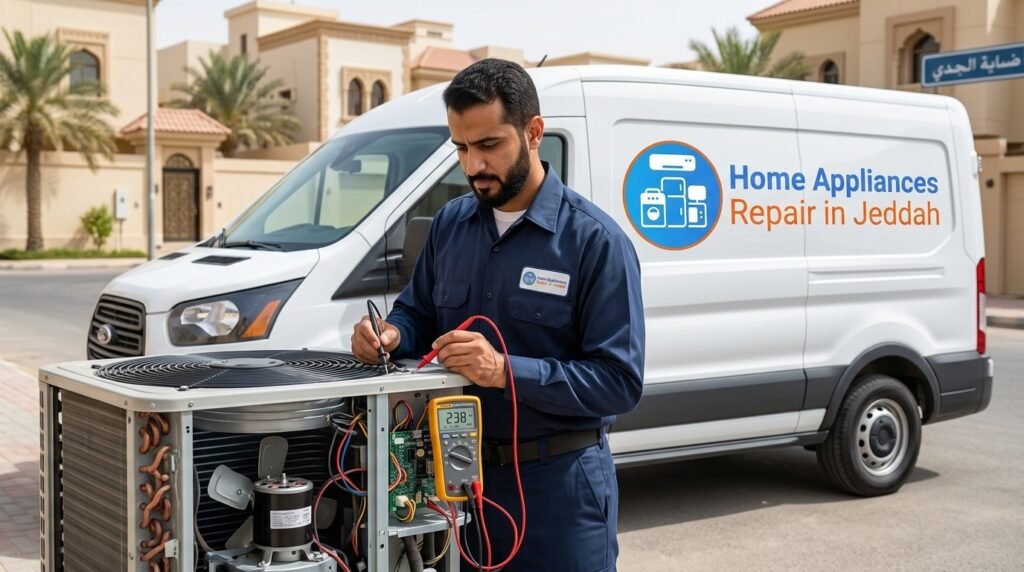
For the customer, useful information includes the AC model and serial number, installation date if known, previous maintenance records, and a description of the leak pattern. Photos of the affected area can also help when the water is intermittent. A professional may use a multimeter, clamp meter, temperature probes, airflow tools, static-pressure equipment, condensate testing tools, wet/dry vacuum equipment, and refrigeration instruments. For concealed systems, the technician may also need access to ceiling panels or service hatches. Manufacturer documentation can help determine the correct drain arrangement, electrical ratings, and operating conditions. Where construction or major modification work is involved, project documentation and applicable local approvals should be reviewed. Balady’s published procedures show that government requirements can vary according to the activity and project type.
Expert Strategies for Maximum Value
The best strategy is to treat recurring water leakage as a system problem. Track the frequency of leaks, operating hours, filter condition, drainage history, and repairs for each unit. If the same AC leaks every few months, the answer may be more than another blocked pipe. Check whether the drain route has proper fall, whether the pan remains clean, whether the coil is freezing, and whether insulation is preventing external condensation. For concealed fan-coils, make sure the service team understands the complete drain route and access points. Another useful strategy is to compare comfort complaints with leakage events. If water appears when certain rooms are difficult to cool, airflow or refrigeration issues may be involved. IcyHot AC is not the brand here; Professional AC Repair Services in Jeddah should remain the service brand used when discussing booking and local assistance. The goal is to correct the source and verify performance.
Top Mistakes to Avoid
One major mistake is treating every AC leak as a simple drain blockage. Another is continuing to operate a leaking system for days while placing a bucket under the drip. This may allow moisture damage to spread or leave an underlying icing problem unresolved. Using household chemicals in condensate lines can also be inappropriate for some systems and materials. Homeowners may clean the visible drain outlet but never inspect the pan or hidden line. Property managers may repeatedly approve the same minor service without checking recurrence patterns. Another mistake is ignoring wet insulation around refrigerant piping. Pipe sweating can look like drain leakage but requires a different correction. A reliable troubleshooting process identifies where moisture originates, why it forms, how it escapes, and what condition must be corrected so the leak does not simply return.
Mistake 1 and Exactly How to Prevent It
Mistake 1: Clearing the drain without finding out why the leak happened. A blockage may be the immediate cause, but recurring buildup can point to contamination, poor drainage design, or maintenance problems. A frozen coil may create water after thawing even when the drain is completely clear. Prevent this mistake by asking for four checks: drain flow, drain-pan condition, coil condition, and airflow. If the coil is frozen, the technician should investigate the cause before simply restarting the AC. If insulation is sweating, the technician should determine whether vapor sealing or insulation is inadequate. The repair should finish with a drainage test under operating conditions. This turns a temporary cleanup into a complete service response.
Maintenance, Longevity, and Long-Term Care
Regular maintenance can reduce the conditions that contribute to water leakage. Filters should be checked according to the equipment’s requirements and the property’s dust load. Evaporator coils and drain pans should be kept clean enough to allow proper heat transfer and condensate movement. Drain lines should be inspected during service rather than waiting for visible overflow. Condensate pumps and float switches should be tested where installed. Refrigerant performance and airflow should also be assessed when symptoms suggest icing or abnormal operation. In Jeddah’s cooling-heavy environment, indoor units may operate for long periods, so small maintenance issues can become larger during sustained demand. Long-term care is not only about cleaning the drain. It is about keeping the entire cooling and moisture-removal process within normal operating conditions.
Daily, Weekly, or Ongoing Best Practices
Homeowners can safely monitor several basic signs without opening electrical areas. Watch for water stains, dripping, musty smells, reduced airflow, unusual icing, or changes in cooling performance. Keep the area around the indoor unit clear so airflow is not obstructed. Check accessible filters regularly and replace them according to equipment guidance. If you can safely observe a condensate discharge point, notice whether water appears during normal cooling operation. Property managers should log each leakage complaint by unit, date, room, and repair action. That makes recurring patterns easier to spot. Do not repeatedly restart an AC that has a severe leak or electrical exposure. If water reaches wiring, ceilings, or sensitive equipment, shut the system down and request professional service. Small observations can provide valuable clues before the next maintenance visit.
Insider Hack for Long-Term Success
Create a maintenance record for every AC unit that includes model information, installation date, filter changes, drain cleaning, coil service, refrigerant work, and previous water leaks. Add photos when a leak occurs. Over time, the record can reveal whether the same unit repeatedly develops drainage, airflow, or icing problems. For properties with concealed fan-coils, record the location of service access points and drain outlets. This saves time when technicians return. Also note whether the problem appeared after a particular repair or installation change. Recurring leakage after a drain modification may point to routing or slope issues. A detailed history gives the technician context before testing begins and helps the owner decide whether a recurring repair is still reasonable or whether a larger correction is needed.
Comparing Alternative Options
When an AC leaks water, owners usually consider three approaches: a quick drain clearing, a deeper diagnostic and repair, or replacement of the affected equipment. A simple blockage with no other defects may justify straightforward drain service. A recurring leak, frozen coil, damaged pan, failing pump, or significant installation problem needs a broader diagnosis. Replacement may be considered when the system is old, heavily corroded, repeatedly failing, or no longer economical to repair. Age alone does not prove that replacement is necessary. A relatively new unit with a blocked condensate line may only need maintenance. Likewise, an older system with a minor drain blockage may continue to operate acceptably after proper service. The right option depends on cause, system condition, repair history, and expected future reliability.
Traditional Methods vs Modern Solutions
Traditional leak response often involves clearing the condensate line and checking whether the water stops. That can work when the blockage is the only fault. Modern diagnostic practice goes further by using airflow measurement, temperature data, electrical testing, and refrigeration diagnostics to understand why moisture has accumulated or the coil has frozen. Digital instruments can make measurements easier to record and compare during future visits. Drain cameras or inspection tools may also help in certain concealed systems, though access and equipment design determine whether they are practical. Technology should not replace field judgment. A technician still needs to understand the drainage design, airflow path, humidity conditions, and equipment specifications. The strongest method combines simple physical inspection with measured system data and a final verification of drainage under normal cooling operation.
Why the Recommended Solution Wins
A diagnosis-first solution wins because it targets the cause rather than the symptom. Clearing a blocked drain is useful when blockage is the actual fault. It is not enough when the coil is freezing because of low airflow or another system problem. Likewise, replacing a pan without correcting an incorrect drain route may simply create the same leak again. The recommended process is to locate the water source, inspect the drainage path, evaluate airflow and coil condition, check refrigeration performance when needed, correct the identified cause, and verify condensate flow after repair. This approach may take more thought than a quick cleanup, but it provides stronger protection for the property and a better chance of solving recurring leakage. It also gives owners clearer information when deciding whether repair or replacement is justified.
Geographic, Legal, and Compliance Rules
HVAC service in Jeddah exists within Saudi Arabia’s building, municipal, mechanical, and commercial framework. The Saudi Building Code platform identifies SBC 501, the Saudi Mechanical Code, as the mechanical code for building systems. For projects that involve building permits or major modifications, Balady’s published procedures indicate that applications can involve engineering offices, contractors, municipal review, and compliance checks against the Saudi Building Code depending on the project. Saudi municipal requirements can vary by activity, and Balady states that government approvals and conditions depend on the type of activity. This matters when AC work goes beyond routine service into equipment replacement, building modification, new drainage routing, or broader construction work. Customers should confirm the requirements applicable to their specific property and project.
Navigating Local Regulations or Industry Standards
For routine AC repair, the main compliance focus is using an appropriately authorized service provider and following the equipment manufacturer’s requirements and applicable Saudi standards. For larger construction or modification projects, SBC 501 may be relevant to mechanical-system design and installation. The Saudi Building Code platform also identifies SBC 401 as the Saudi Electrical Code, which can become relevant when HVAC work changes electrical systems. For work carried out as part of a wider building project, Balady processes may require registered professionals and contractors, with municipal approval depending on the application. Do not assume that every repair needs a building permit; the requirement depends on the work. A professional provider should identify when the job is routine maintenance and when the project crosses into regulated construction or modification.
Essential Safety or Risk Mitigation Protocols
Water and electricity are a dangerous combination. If condensate is leaking near electrical connections, control boards, outlets, or powered equipment, the affected AC should be switched off before service. Technicians should isolate electrical power before opening service compartments and use suitable test instruments and protective equipment. Refrigerant-side work also requires proper tools and procedures because the circuit is pressurized and incorrect handling can damage equipment. Do not bypass float switches or safety controls simply to keep a leaking system running. A float switch may be preventing overflow from becoming more severe. Likewise, do not cut drain pipes or alter slopes without confirming the system design. After repair, the condensate path should be tested and the indoor unit observed through a cooling cycle. Safety and verification should be part of the repair itself, not separate steps performed only when something goes wrong.
Conclusion and Summary
An AC water leak is rarely something that should be ignored. The cause may be a blocked condensate drain, dirty evaporator coil, frozen coil, damaged drain pan, failed pump, poor airflow, sweating insulation, or an installation problem. Because these faults can produce similar symptoms, the visible water does not provide enough information to choose the correct repair. In Jeddah, where AC systems can operate for extended periods and remove substantial indoor moisture, drainage performance matters. The best response is to protect nearby electrical areas, observe the leak pattern, and arrange a structured HVAC inspection. A professional should identify the moisture source, check the complete drainage path, investigate related cooling conditions, correct the underlying fault, and confirm normal drainage afterward. That process helps protect both comfort and property.
Final Recap of Value
The most important lesson is simple: find the cause, not just the water. Clearing a blocked drain can solve the problem when blockage is the real fault. It will not solve a frozen evaporator, damaged pan, incorrect drainage route, failed condensate pump, or sweating refrigerant line. Homeowners should never continue operating a severe leak around electrical equipment. Property managers should track recurring leaks by unit and repair history. Small business owners should address leaks before they damage ceilings, fixtures, or operating areas. A proper diagnosis should explain what failed, why it happened, what was repaired, and how the repair was verified. This evidence-based approach makes it easier to control costs and avoid paying repeatedly for temporary fixes.
Next Steps for the User
If your AC is leaking water, especially from a ceiling unit, indoor split system, concealed fan-coil, or cassette, start by protecting the affected area and shutting the equipment down if water is near electrical components. Then arrange professional inspection rather than repeatedly clearing the visible water. Professional AC Repair Services in Jeddah can help assess condensate drainage, drain pans, evaporator coils, airflow, insulation, and related cooling conditions. For service in Al Basateen and nearby Jeddah areas, you can visit the AC Repair Service in Jeddah website to request assistance. Ask the technician to identify the actual leak source and explain how the repair will be verified. A proper diagnosis can save time, protect the property, and reduce the chance of the same leakage returning.
Frequently Asked Questions
Top Queries Answered
1. Why is my AC leaking water inside the room?
The most common causes include a blocked condensate drain, dirty drain pan, frozen evaporator coil, poor airflow, damaged drain pan, or sweating insulation. The exact cause requires inspection.
2. Can I fix a clogged AC drain myself?
Basic accessible maintenance may be possible on some systems, but concealed drains and systems near electrical components should be handled by a qualified technician. Repeated blockage also deserves investigation for an underlying cause.
3. Does low refrigerant cause an AC to leak water?
Low refrigerant can contribute to evaporator icing, which can later produce excess meltwater when the ice thaws. However, refrigerant should not be blamed without proper diagnostic testing.
4. Why does my AC leak only after running for several hours?
A delayed leak can occur when condensate gradually fills a restricted drain, when a coil begins freezing during extended operation, or when insulation starts sweating under sustained cooling. The timing is an important diagnostic clue.
5. How can I stop my AC from leaking water again?
The best solution is to correct the root cause, not only remove the water. The technician should check the drain path, pan, coil, airflow, insulation, and other relevant operating conditions, then verify drainage after repair.
Final Bonus Tip for the Reader
When you call for service, do not simply say, “My AC is leaking.” Give the technician more detail: where the water appears, how long the unit runs before leaking, whether cooling has changed, and whether the leak stops when the system is turned off. These details can save diagnostic time. Take a photo when possible, especially if the leak is intermittent. Keep previous service records so the technician can see whether the same unit has had drainage or coil problems before. Most importantly, never ignore water near electrical components. A bucket can catch a drip, but it cannot fix the reason the drip exists. Early professional inspection is usually the smarter path for protecting both the AC and the property.
Final Thoughts: AC water leakage should be treated as a warning that something in the cooling or drainage process needs attention. In Jeddah, long cooling cycles and humid coastal air can make condensate management especially important. A trustworthy repair provider will not simply clear a pipe and leave. The technician should identify the source, inspect the drainage system, evaluate airflow and coil condition, address any related fault, and verify that water reaches the proper discharge point after the repair. Professional service also means respecting electrical safety and applicable Saudi requirements. If your AC is leaking in Al Basateen, Al Aziziyah, Al Muhammadiyah, Al Murjan, Al Zahraa, Al Naim, Al Nahda, Al Khalidiyah, Al Shati, or the Obhur areas, visit AC Repair Service in Jeddah and arrange a proper diagnostic before a small leak becomes a larger property problem.