
How Long Does an AC Repair Usually Take? Get Clear Answers in Jeddah
Core Introduction to AC Repair Time
How long does an AC repair usually take? The answer depends on the fault, the type of air conditioner, the availability of parts, and how easy the unit is to access. A simple filter issue may take only a short visit, while a refrigerant leak, failed compressor, or complex electrical fault can require several hours or a follow-up appointment.
For homeowners and businesses in Jeddah, a working AC is essential during hot weather. A delay can affect sleep, customer comfort, and daily operations. AC Repair Service In Jeddah can help you arrange an inspection through its official website. The technician should first diagnose the problem, explain the repair, and provide a realistic time estimate rather than promise a fixed completion time before checking the system.
Why Repair Time Matters in Jeddah
In areas such as Al Basateen, Al Aziziyah, Al Muhammadiyah, and Al Murjan, AC systems may run for long periods during hot weather. When a unit stops cooling, families may need a quick repair, while shops and offices may face interruptions to their work.
Repair time also depends on the system design. A wall-mounted split AC may be easier to access than a concealed ducted unit or equipment installed above a ceiling. If a technician needs special access equipment or a replacement part, the visit may take longer. Sharing the unit type and symptoms when booking helps the service team plan the visit.
A Real-World Example: A Repair That Takes Longer Than Expected
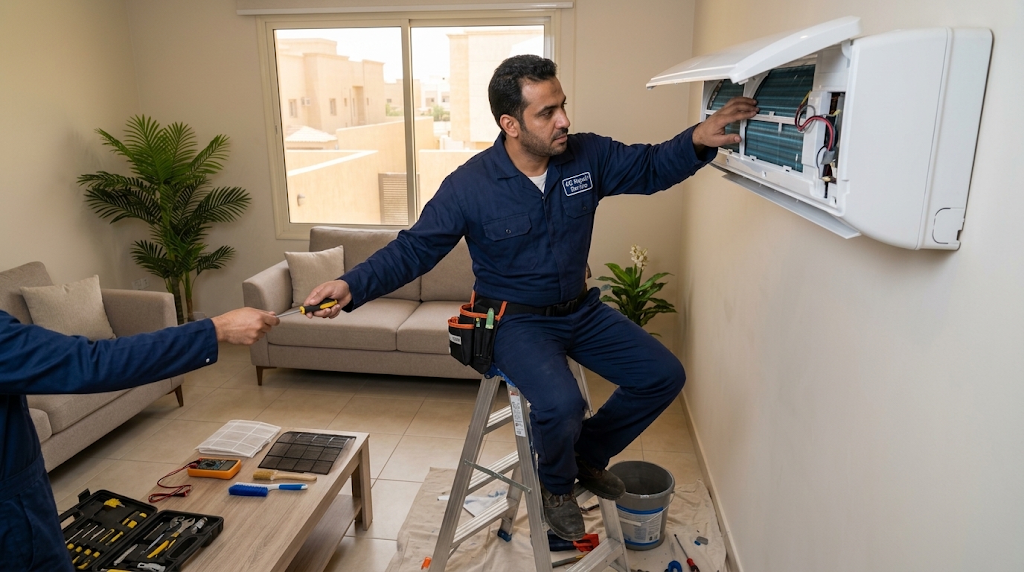
Consider a typical service scenario: an AC runs continuously but blows warm air. The technician checks the filter, airflow, thermostat settings, and outdoor unit. The initial checks suggest a possible refrigerant leak, so the technician needs to locate the leak before deciding whether refrigerant work is required.
The first inspection may take less time than the full repair. Finding the leak, fixing it, and confirming correct operation can extend the visit. This is an illustrative example, not a verified customer case. It shows why a useful time estimate should separate diagnosis, repair, and final testing.
How AC Repair Time Is Estimated: The Core Process
A technician usually estimates repair time in stages. First comes diagnosis, followed by approval, repair work, and operational testing. Each stage answers a different question: What has failed? What work is needed? Are the parts available? Does the system cool safely after the repair?
A simple fault may be resolved during the first visit. More complex problems can require extra testing or a return appointment. The time spent travelling to your property is separate from the time needed to repair the AC. When booking, ask for an estimated arrival window and a separate estimate for the work itself.
The Initial Phase: Inspection and Preparation
The technician starts by discussing the symptoms and checking the equipment. They may inspect the thermostat, air filter, indoor airflow, outdoor unit, electrical connections, and any visible signs of water leakage. These checks help narrow down the possible causes before parts are removed or replaced.
You can make this stage more efficient by sharing the AC model, the time the fault started, and any recent repairs. Tell the technician if the breaker has tripped, the unit makes unusual noises, or the cooling stops intermittently. Accurate details help guide testing, although they cannot replace an on-site diagnosis.
The Execution Phase: Repair and Testing
Once the fault is confirmed, the technician explains the proposed repair and its likely duration. Replacing an accessible component may be straightforward, while locating a hidden refrigerant leak or repairing a compressor circuit can take longer. The technician should obtain your approval before proceeding with work outside the agreed scope.
After the repair, the system needs appropriate checks. These may include verifying airflow, checking for leaks, confirming electrical operation, and observing cooling performance under suitable conditions. A unit starting successfully does not always prove that the underlying problem has been fixed. Testing helps identify faults that remain or require further investigation.
Technical Details: What Determines the Actual Repair Duration?
HVAC technicians may use temperature measurements, electrical readings, airflow checks, and refrigerant-system diagnostics to identify a fault. The correct tests depend on the equipment and symptoms. For example, low refrigerant pressure alone does not prove a leak; operating conditions and manufacturer specifications matter when interpreting readings.
A technician should also consider compressor protection delays, thermostat settings, coil condition, and outdoor operating conditions. If a refrigerant leak is confirmed, the time needed to locate and repair it depends on its position and accessibility. Any required parts, safe access arrangements, or additional testing can extend the total job time.
Core Benefits of Accurate Repair-Time Estimates
A realistic time estimate helps you plan your day, arrange property access, and reduce disruption. Homeowners can decide whether to remain at home, while property managers can coordinate access to apartments or shared equipment. Business owners can plan around customer visits and working hours.
An estimate also helps set expectations. It should explain what the technician expects to do and what could delay completion. No responsible provider can guarantee the exact duration of every repair before inspecting the unit. The goal is to give you a useful range, then update it if the diagnosis changes.
Financial, Strategic, and Time-Saving Advantages
Knowing the likely repair duration can help you compare service options without focusing on speed alone. A very short visit is not necessarily better if the technician skips essential diagnostic checks. Equally, a long visit should have a clear reason, such as difficult access, a complex fault, or a necessary part replacement.
For offices, shops, and rental properties, clear timing supports better scheduling. Ask whether the provider can complete the diagnosis and repair in one visit, and whether the technician expects to carry common parts. These details may help reduce delays, but completion still depends on the fault and equipment requirements.
A Useful Metric: Track Three Separate Times
When assessing a repair, record three time periods: the wait until the technician arrives, the time spent diagnosing the fault, and the time spent completing and testing the repair. Keeping these separate helps you understand where delays occurred.
For example, a technician might arrive within the agreed window but discover that a required part is unavailable. That is different from spending extra time locating an intermittent electrical fault. There is no single industry-wide repair duration that applies to every AC model and failure, so use the technician’s job-specific estimate instead of treating a general average as a guarantee.
Common Challenges That Delay AC Repairs
The most common delays involve faults that are difficult to locate, parts that are not immediately available, and equipment that is hard to reach. A split AC installed in an accessible room may be simpler to service than a ducted system with concealed components. Intermittent faults can also take longer because the technician must reproduce the problem or collect more measurements.
Jeddah’s high cooling demand can affect appointment availability during periods of extreme heat. Traffic, building access rules, and coordination with landlords may add time before work begins. Tell the service provider about parking, access restrictions, and any building approval requirements when arranging the visit.
Choosing the Right AC Repair Professional
The best technician is not simply the one who promises the shortest visit. Choose a provider that explains the diagnostic process, gives a clear estimate, and tests the system after completing the repair. A professional should also explain when a fault cannot be fixed immediately because a part, specialist tool, or further inspection is needed.
For properties in Al Zahraa, Al Naim, Al Nahda, Al Khalidiyah, and Al Shati, confirm that the provider serves your area and ask about appointment availability. Before booking, check the diagnostic fee, labor charges, parts policy, and any warranty terms. Clear answers help you plan with fewer surprises.
Key Credentials and Features to Look For
Ask whether the technician has experience with your AC type, such as a wall-mounted split unit, multi-split system, or ducted air conditioner. They should use suitable diagnostic tools and follow the manufacturer’s service instructions. Refrigerant handling and electrical repairs require the right training, equipment, and safety procedures.
A good provider explains the fault in simple language and connects the recommended work to the test results. Be cautious of anyone who guarantees a very short repair time without asking about the symptoms or equipment. Ask for an itemized quote and confirmation of what the final operational test will include.
Crucial Evaluation Questions
Use these questions to compare providers before approving a repair. They focus on the likely duration, possible delays, and the checks that confirm the work is complete. Ask for answers based on your specific unit rather than a generic promise.
| Question to Ask | Why It Matters |
|---|---|
| How long will diagnosis take? | Separates troubleshooting time from repair time. |
| Can the repair be completed today? | Helps you plan around possible follow-up visits. |
| Are the required parts available? | Parts shortages can delay completion. |
| What could extend the repair? | Identifies access, testing, or technical concerns. |
| What tests will you perform afterward? | Confirms that the repair includes operational checks. |
Understanding AC Repair Costs and Time
Repair duration and repair cost often depend on the same factors: fault complexity, labor required, replacement parts, and access to the equipment. However, a longer repair does not always mean a higher bill, and a short repair is not always inexpensive. Some components cost more than others, even when replacement takes relatively little time.
Ask the provider to separate the diagnostic fee, labor, parts, and any emergency call-out charge. Confirm whether testing is included and whether extra work requires your approval. For a more accurate estimate, the technician should identify the likely fault before quoting the final repair.
Breakdown of Base Costs and Resources Required
A repair estimate may include the initial inspection, troubleshooting, labor, replacement components, cleaning materials, and final testing. A routine maintenance issue may need little more than basic cleaning or a filter replacement. A compressor fault, refrigerant leak, or damaged control board can require specialist tools and more extensive work.
The technician may also need a second visit if the correct part is not available locally. Ask whether the quote covers both visits and whether parts are covered by a warranty. Do not compare estimates by price alone; check that each provider proposes the same scope of work and appropriate testing.
Hidden Fees and Unexpected Delays
Additional charges may apply to after-hours visits, difficult access, specialist equipment, or work outside the original estimate. Delays can also occur when a technician finds a second fault during testing. These possibilities should be explained before extra work begins whenever practical.
Before booking, ask about the diagnostic fee, cancellation terms, labor rate, parts availability, and charges for a return visit. If the technician discovers a more serious problem, request an updated estimate and expected completion time. Written approval helps you control costs and understand why the original estimate has changed.
Pro Tip: Reduce Avoidable Waiting Time
When requesting service, provide the AC’s make and model, a description of the fault, and any error code shown on the display. If possible, share a photo of the model label without removing covers or touching electrical parts. Tell the provider whether the unit is split, ducted, or part of a larger system.
This information may help the technician prepare suitable tools and common parts before arrival. It cannot guarantee a same-visit repair, but it can reduce uncertainty and make the initial inspection more focused.
Step-by-Step Guide to Arranging an AC Repair
Start by recording the symptoms and checking whether there is an immediate safety risk. Then contact a service provider, explain what happened, and ask about the estimated arrival window and diagnostic fee. Once the technician identifies the fault, request a repair estimate that includes labor, parts, and testing.
Approve the work only after you understand the proposed solution and likely timing. If a replacement part is needed, ask when it is expected to arrive and whether the AC can be operated safely while you wait. After the repair, request an explanation of the completed work and any maintenance steps that could help prevent a repeat failure.
What to Do First
Note whether the AC is blowing warm air, making unusual noises, leaking water, switching off repeatedly, or failing to start. These symptoms help the technician prepare for the visit. If the unit produces smoke, sparks, or a burning electrical smell, turn it off if safe and arrange urgent professional assistance.
Do not repeatedly reset a tripping breaker or attempt repairs inside electrical panels. If there is no immediate danger, check only accessible settings and filters according to the manufacturer’s instructions. Give the service provider your location in Jeddah, unit type, and preferred appointment time so they can confirm availability.
Tools, Documents, and Details to Prepare
You do not need professional tools to book a repair. Prepare the model number, approximate unit age, previous service records, and a brief description of the symptoms. If the AC displays an error code, record it without opening the unit. For rental properties, arrange permission for access and confirm any building-specific procedures.
Keep previous invoices available if the same fault has returned. They may show which components were repaired or replaced and whether the work is still covered by a warranty. Leave electrical testing, refrigerant gauges, and internal component removal to appropriately trained technicians.
Expert Strategies for Faster, Better AC Repairs
The most useful way to shorten a repair is to reduce avoidable uncertainty, not to skip diagnostic steps. Share accurate symptoms, arrange access before the appointment, and explain any earlier repair attempts. For commercial properties, identify the affected rooms and equipment so the technician can understand the impact and plan the work.
Ask whether the provider expects to carry likely replacement parts, but understand that diagnosis may reveal a different fault. Request an update if the work takes longer than expected. A clear explanation of the cause, remaining tasks, and revised timing is more useful than an unsupported promise that the AC will be fixed within a set number of minutes.
Top Mistakes to Avoid
One common mistake is choosing a technician based only on a promise of immediate repair. A quick response and a quick repair are not the same thing. Another mistake is approving a costly component replacement before the technician explains the diagnostic findings. Some symptoms have several possible causes, so proper testing matters.
Avoid running an AC that shows signs of electrical danger just to keep the room cool. Do not try to speed up repairs by dismantling the indoor unit or handling refrigerant yourself. Give the technician accurate information, agree on the work scope, and allow enough time for the required safety and performance checks.
Mistake 1: Expecting Every Repair to Finish in One Visit
Some repairs can be completed during the first visit, but others depend on specialist parts, hard-to-find faults, or safe access arrangements. Expecting every problem to be fixed immediately can lead to rushed decisions or frustration when a follow-up appointment is needed.
Prevent this by asking for two estimates: the likely time for diagnosis and the expected time for repair once the fault is confirmed. Ask what could change that estimate and whether parts are available. This gives you a more realistic plan without pressuring the technician to skip important tests.
Maintenance, Longevity, and Long-Term Care
Regular maintenance can reduce some avoidable breakdowns, although it cannot prevent every failure. Follow the manufacturer’s guidance for filter care and arrange inspections based on how often the AC runs, the surrounding dust levels, and the system’s condition. A clean filter and clear airflow can help the unit operate as intended.
Pay attention to warning signs such as unusual noises, water leaks, weak airflow, and repeated shutdowns. Early inspection may identify a simple issue before it causes more disruption. Keep service records for each unit, especially in rental buildings and commercial properties where several systems may need attention throughout the year.
Daily, Weekly, and Ongoing Best Practices
Keep supply vents and return-air grilles clear of furniture, curtains, and stored items. Check accessible filters at the interval recommended for your model, and look for visible water around the indoor unit. Do not open internal panels or touch electrical components as part of routine checks.
If cooling becomes weak or the unit starts making unusual sounds, record when the change occurs and arrange an inspection if it persists. Property managers can maintain a simple log of service dates, reported faults, and replaced parts. These records help technicians identify recurring problems and make better repair-time estimates.
Insider Tip for Long-Term Success
Ask the technician to explain what caused the fault and whether any maintenance action could reduce the chance of it returning. For example, a recurring drainage problem may need more than clearing the line, while repeated electrical trips require proper fault diagnosis rather than repeated resets.
Keep the service report and warranty details in one place. If the same symptom returns, share those records with the provider. This gives the next technician useful context and may prevent unnecessary repeat work.
Comparing Alternative AC Repair Options
When an AC stops cooling, you may consider a DIY check, a general maintenance visit, or a professional diagnostic repair. The right choice depends on the symptoms and the risk involved. Checking thermostat settings or an accessible filter may be reasonable, but refrigerant work, electrical troubleshooting, and internal component repairs need suitable skills and equipment.
Waiting may seem easier if the unit still runs, but persistent faults can disrupt comfort and may cause further damage. On the other hand, replacing the entire system without confirming the cause can be unnecessary. Start with an assessment that matches the problem and the equipment.
Traditional Methods vs. Modern Diagnostic Solutions
Basic troubleshooting often starts with visual checks, filter inspection, and thermostat settings. These steps can identify simple problems, but more complex faults may require electrical measurements, temperature readings, airflow assessment, or refrigerant-system testing. Modern tools help technicians collect evidence, but the results still need to be interpreted correctly.
The best method is the one that answers a specific diagnostic question. A technician should explain why a test is needed and how its results will guide the repair. Avoid paying for tests that are unrelated to the symptoms, but do not reject necessary checks simply because they take extra time.
Why Diagnosis-Led Repair Is the Better Choice
A diagnosis-led repair aims to find the cause before replacing parts. This helps reduce guesswork and provides a clear basis for the time estimate, repair quote, and final checks. It also helps distinguish between a failed component and a problem caused by airflow, settings, wiring, or another part of the system.
It cannot guarantee that every repair will be completed on the first visit. Some faults are intermittent, and parts may need to be ordered. A good technician will explain what has been confirmed, what remains uncertain, and when the next update can be expected.
Geographic, Legal, and Safety Considerations in Jeddah
The time needed for an AC repair can vary by neighborhood, building type, traffic, and access to the equipment. A technician working in Al Khalidiyah may need different access arrangements from one servicing a rooftop unit in a commercial building. Properties in Obhur Al Shamaliyah and Obhur Al Janoubiyah may also have building-specific rules for accessing shared equipment.
When booking, confirm the service area, expected arrival window, and any access requirements. Repair work should follow applicable Saudi requirements, relevant safety procedures, and the manufacturer’s instructions. The exact obligations depend on the work being performed, the equipment, and the property.
Navigating Local Regulations and Industry Standards
For electrical work, refrigerant handling, or repairs in shared commercial buildings, ask whether the provider and technician meet the applicable Saudi requirements for the task. Building management may require prior approval, work permits, or access arrangements for rooftops and plant rooms.
There is no single regulatory time limit for every residential AC repair. Likewise, no universal temperature, pressure, or electrical reading can confirm that all AC systems are repaired correctly. Technicians should use equipment-specific specifications and appropriate procedures, then explain any remaining limitations. Request a written record of the work and the checks performed.
Essential Safety and Risk-Reduction Protocols
Electrical isolation and safe work practices are essential before internal servicing. Refrigerant work should be carried out by appropriately trained personnel with suitable tools. Technicians should also handle cleaning products according to their instructions and safety information, keeping occupants away from unnecessary exposure.
If the unit produces smoke, sparks, or a strong burning odor, stop using it and seek professional assistance. Do not repeatedly reset a tripping breaker. If you suspect a gas leak from another source, leave the affected area and contact the appropriate emergency service from a safe location.
Conclusion and Summary
So, how long does an AC repair usually take? It depends on the fault, equipment type, access, parts availability, and testing needed afterward. Simple problems may be resolved during one short visit, while complex electrical, compressor, or refrigerant faults can require several hours or a return appointment.
The most useful estimate comes after diagnosis. Share clear symptoms, ask what work is included, and confirm whether parts are available. For homeowners, property managers, and businesses in Jeddah, planning around a realistic time window helps reduce disruption without encouraging rushed repairs.
Final Recap of Value
Repair time includes more than the physical replacement of a part. Diagnosis, safe preparation, access, repair work, and final testing all matter. Ask your technician to explain each stage and update you if the findings change the plan.
Do not choose a provider solely because they promise the fastest result. Look for a clear process, appropriate technical skills, an itemized estimate, and suitable post-repair checks. These details help you understand both the expected duration and the quality of the work.
Next Steps for Your AC Repair
If your AC is not cooling properly, making unusual noises, or repeatedly shutting down, arrange an inspection before the fault worsens. When contacting AC Repair Service In Jeddah, share your location, AC type, symptoms, and any visible error code.
Visit the AC Repair Service In Jeddah website to inquire about service options and appointment availability. Confirm the diagnostic fee, estimated arrival window, and likely repair duration before approving work. A clear discussion at the start helps you plan your day and understand what the repair involves.
Frequently Asked Questions
Top Queries Answered
1. How long does a typical AC repair take?
The time depends on the fault. A simple adjustment or accessible filter issue may take a short visit, while electrical troubleshooting, refrigerant leak repair, or compressor work can take several hours or longer. An inspection provides a more useful estimate.
2. Can an AC be repaired in one visit?
Yes, if the fault is clear, the required parts are available, and the equipment is accessible. A second visit may be needed when a specialist part must be ordered or further testing is required.
3. Why is my AC repair taking longer than expected?
The technician may be tracing an intermittent fault, waiting for a replacement part, or completing safety and performance checks. Ask what has been confirmed, what remains to be done, and when you can expect the next update.
4. Does emergency AC repair take less time?
Emergency service may shorten the wait for an appointment, but it does not make a complex repair faster by itself. The diagnosis, parts availability, and work required still determine the completion time.
5. How can I get faster AC repair in Jeddah?
Share the unit model, symptoms, error codes, and previous repair details when booking. Arrange access in advance and ask whether likely parts are available. These steps may reduce avoidable delays, but the actual repair time depends on the fault.
Final Bonus Tip for the Reader
When booking an AC repair, ask for an estimated arrival window and a separate estimate for diagnosis and repair. Keep the technician’s contact details and confirm any change to the agreed time. This small step makes it easier to plan around the visit without confusing travel time with the time needed to fix the system.
Final Thoughts: Knowing how long an AC repair usually takes helps you plan ahead, but the right diagnosis matters more than a rushed appointment. From a simple airflow issue to a complex compressor fault, each repair deserves the time needed to identify the cause and check the result. If your AC has stopped cooling in Jeddah, do not wait for the problem to become harder to manage. Contact AC Repair Service In Jeddah through its official website to ask about available appointments, diagnostic fees, and estimated repair times. Get the facts first, approve the work with confidence, and make comfort your next step.